Day 41: God’s Deliberate Plan (John 19:7–26)
“Jesus answered, “You would have no authority over Me, unless it had been given you from above.”
John 19:11 (NASB)
This is the the broad sweep of redemptive history to the crucifixion narrative, situating John 19 within the full arc of God's foreknowledge and sovereign plan. From Acts 2:23, Peter declares at Pentecost that Jesus was 'delivered up according to the definite plan and foreknowledge of God.' From Acts 4:27–28, the early church prays recognizing that Herod, Pilate, the Gentiles, and the peoples of Israel did 'whatever your hand and your plan had predestined to take place.' What looks like a political and religious accident was the fulfillment of a plan older than the world.
Psalm 22 — the most quoted psalm in the New Testament — and Isaiah 52:13–53:12 — the Servant Song, of which every verse is quoted somewhere in the New Testament — form the scriptural backbone of the crucifixion. The seamless garment for which soldiers cast lots (19:24, fulfilling Psalm 22:17–21), the three languages on the titulus (19:19–22), the silence of Jesus before Pilate (19:9–10), and the handing over by Pilate to the Jewish leaders (19:16) all unfold along the lines the prophets drew centuries before. God is in the details, and nothing comes to pass without His knowledge.
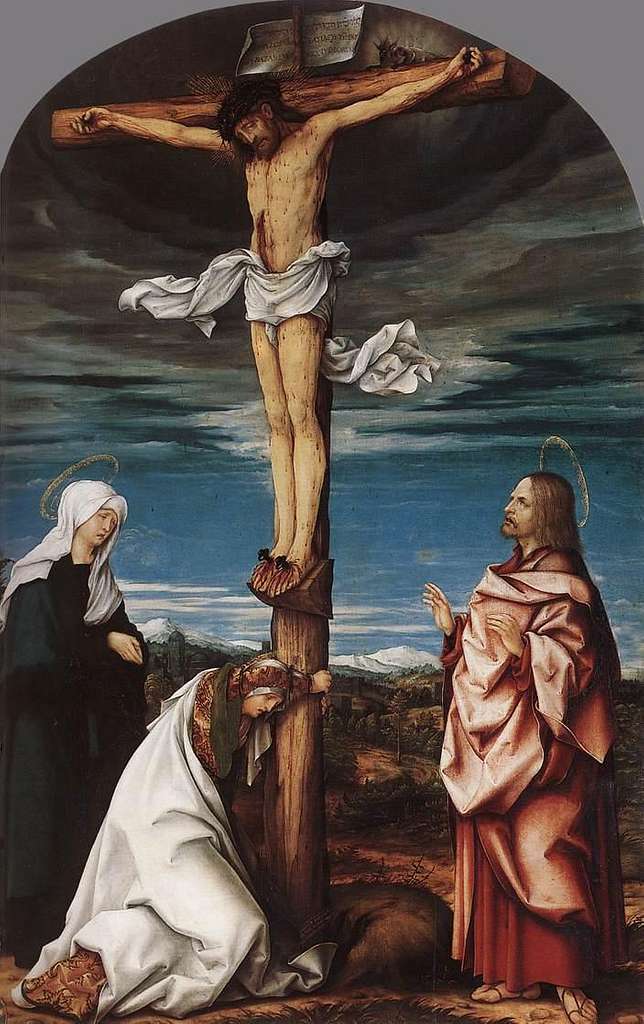
The women at the cross (19:25–26) — Mary the mother of Jesus, Mary (possibly Salome, Mary's sister), Mary of Clopas, and Mary Magdalene — represent the faithful remnant present at the moment of crisis. Jesus, in His dying moments, entrusts the care of His mother to the Beloved Disciple. He calls her 'Woman' — the same address used at Cana (2:4) — linking the beginning and end of His public ministry. Three causes converge at the cross: God's sovereign purpose (efficient cause), the sinfulness of human actors (instrumental cause — Jewish leaders, Pilate, the crowd), and the hands of the soldiers (immediate cause). All three are real; none excuses the others.
For Reflection
- We are reminded that God is in the details and nothing comes to pass without His knowledge. How does this increase your faith when circumstances feel out of control?
- What can we learn from the trials of Jesus — the injustice, the false testimony, the political cowardice — about how to maintain integrity under pressure?
- Jesus's suffering was foreknown and foreordained. How does that deepen your understanding of what it cost God to save you?