Day 40: God in the Dock (John 18:28–19:7)
“Jesus answered, “My kingdom is not of this world. If My kingdom were of this world, then My servants would be fighting so that I would not be handed over to the Jews; but as it is, My kingdom is not of this realm.”
John 18:36 (NASB)
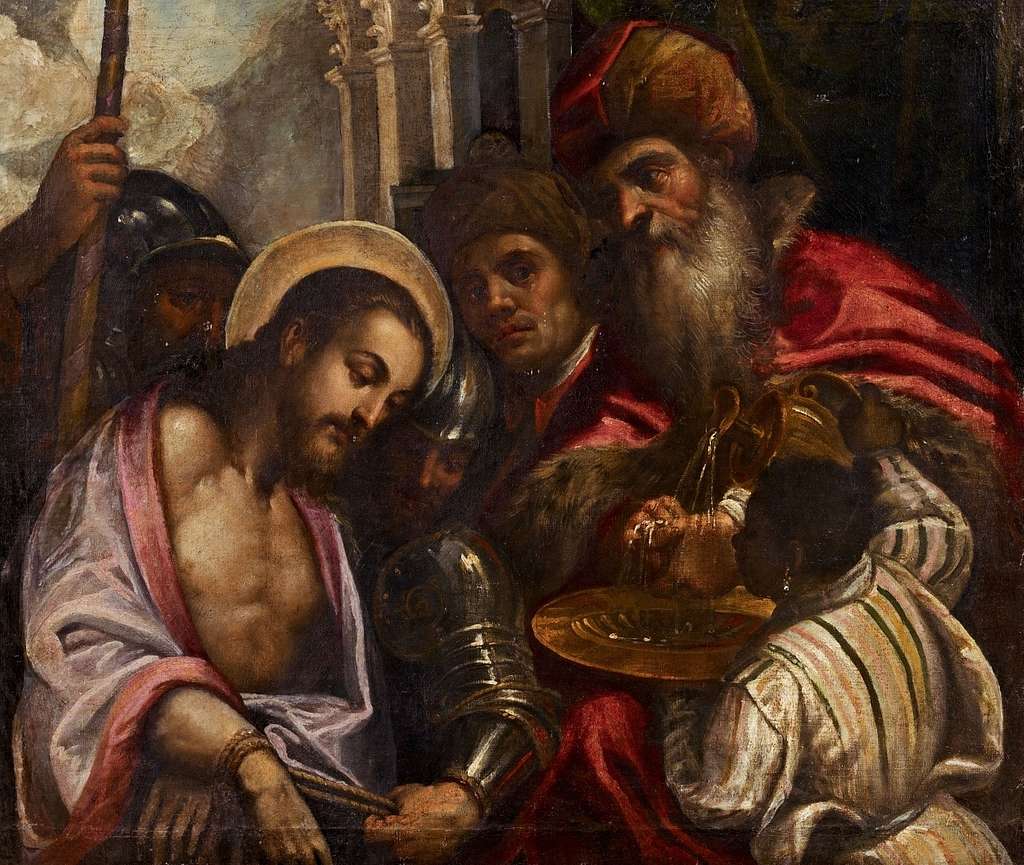
The scene shifts to the Praetorium — Pilate's headquarters. The Jewish leaders will not enter lest they become ceremonially unclean before the Passover. The Johannine irony is devastating: they are concerned about ritual purity while engineering the murder of the Messiah. Pilate goes out to them. The exchange is a masterpiece of political irony: Pilate is looking for a way to release Jesus; the Jewish leaders are looking for a death sentence; neither party gets what they want in the way they expected.
When Pilate questions Jesus about His kingship, Jesus answers with a distinction: 'My kingdom is not of this world.' He is a king — but His proof of kingship is His peaceful surrender, not military conquest. Verse 37: 'For this purpose I was born and for this purpose I have come into the world — to bear witness to the truth. Everyone who is of the truth listens to my voice.' Pilate's response — 'What is truth?' — is simultaneously the most modern and the most tragic line in the Passion narrative. The Truth is standing in front of him and he cannot see it. He walks back to the crowd and announces: 'I find no guilt in him.' And then he has Jesus flogged anyway. He has made his choice.
C. S. Lewis noted that the modern man has put God in the dock — on trial, waiting to hear if He can justify His existence. Pilate embodies this posture: he has the power, Jesus is the accused, and the outcome will somehow implicate Pilate forever. The thorns (Genesis 3:18, the curse of Adam) are pressed onto Jesus's head. The mocking purple robe is placed on His shoulders. Pilate presents Jesus to the crowd with the words 'Behold the man!' — Ecce Homo — and John lets it stand as both mockery and proclamation: behold the true Man, the new Adam, the Savior.
For Reflection
- Pilate asked 'What is truth?' while the Truth stood before him. Are there ways you allow genuine questions about truth to become excuses for avoiding the Person who is Truth?
- Jesus bore our shame — the crown of thorns, the mocking robe, the humiliation. How do we keep that before our hearts without becoming morbid, but as a source of genuine thankfulness?
- Pilate found no guilt in Jesus and still handed Him over. What does it cost you to act on what you know is right when the pressure is strong to do otherwise?