Day 46: My Lord and My God (John 20:24–31)
“Thomas answered and said to Him, “My Lord and my God!”
John 20:28 (NASB)
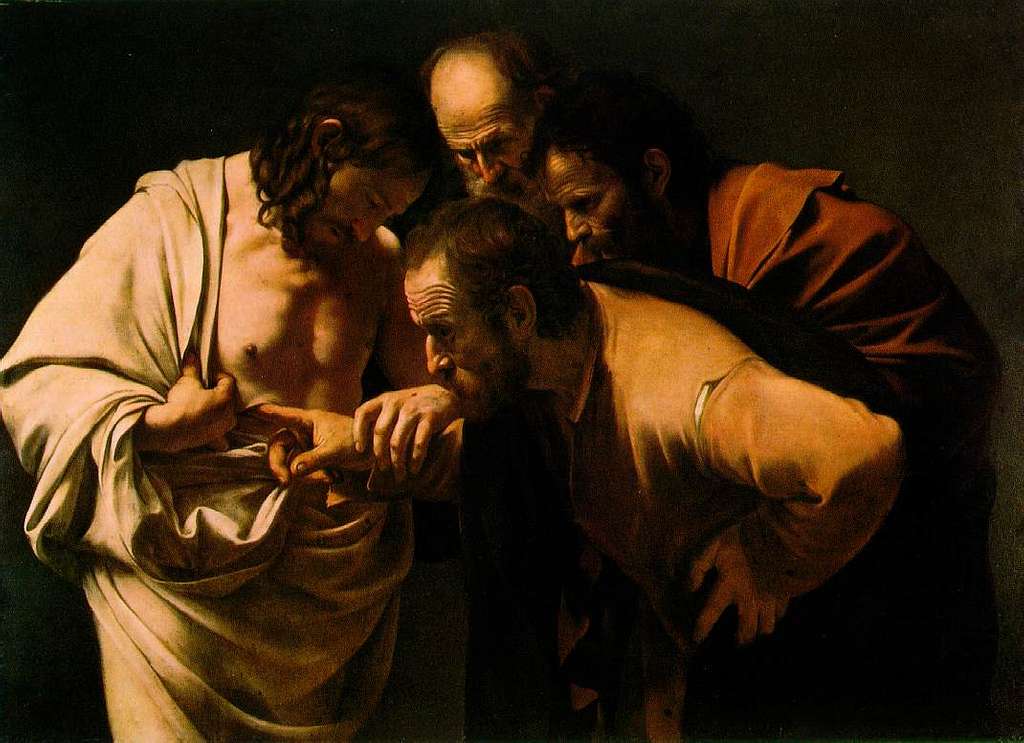
Thomas was not with the others when Jesus appeared. He refuses to believe on the basis of their testimony: 'Unless I see in his hands the mark of the nails, and place my finger into the mark of the nails, and place my hand into his side, I will never believe.' A week later, the doors are shut again, Jesus appears again, and addresses Thomas directly: 'Put your finger here, and see my hands; and put out your hand, and place it in my side. Do not disbelieve, but believe.' Thomas's response is the highest Christological confession in the Gospel: 'My Lord and my God.'
John places Thomas in a chiastic relationship with Nathanael from chapter 1: both are told about Jesus by another, both doubt, both are met by Jesus with supernatural knowledge, both make high confessions, and both are told they will see greater things. The pattern is deliberate. Thomas is not uniquely faithless; he is one instance of a recurring human pattern — skepticism yielding to encounter, encounter yielding to worship. His doubting is not celebrated, but his confession is.
Verse 29 addresses every reader who has not seen the risen Jesus physically: 'Blessed are those who have not seen and yet have believed.' The entire Gospel has been building to this moment. Verses 30–31 give John's own statement of purpose: many other signs were performed that are not in this book, but these are written so that you may believe that Jesus is the Christ, the Son of God, and that by believing you may have life in his name. The Gospel is an evangelistic document, but also a document for believers: truth is the antidote to doubt, and not blind faith but reasoned faith on the basis of eyewitness testimony.
For Reflection
- Thomas wanted evidence before he would believe. The Bible never asks us to believe something that isn't true. What evidence has strengthened your own faith?
- Thomas's confession — 'My Lord and my God' — is the highest point of personal devotion in the Gospel. What would it look like to make that confession freshly and personally this week?
- John says he wrote so we could believe and have life. How has studying John's Gospel affected what you believe and how you live?