Day 22: The Good Shepherd (John 10:1–18)
“I am the good shepherd; the good shepherd lays down His life for the sheep.”
(NASB)
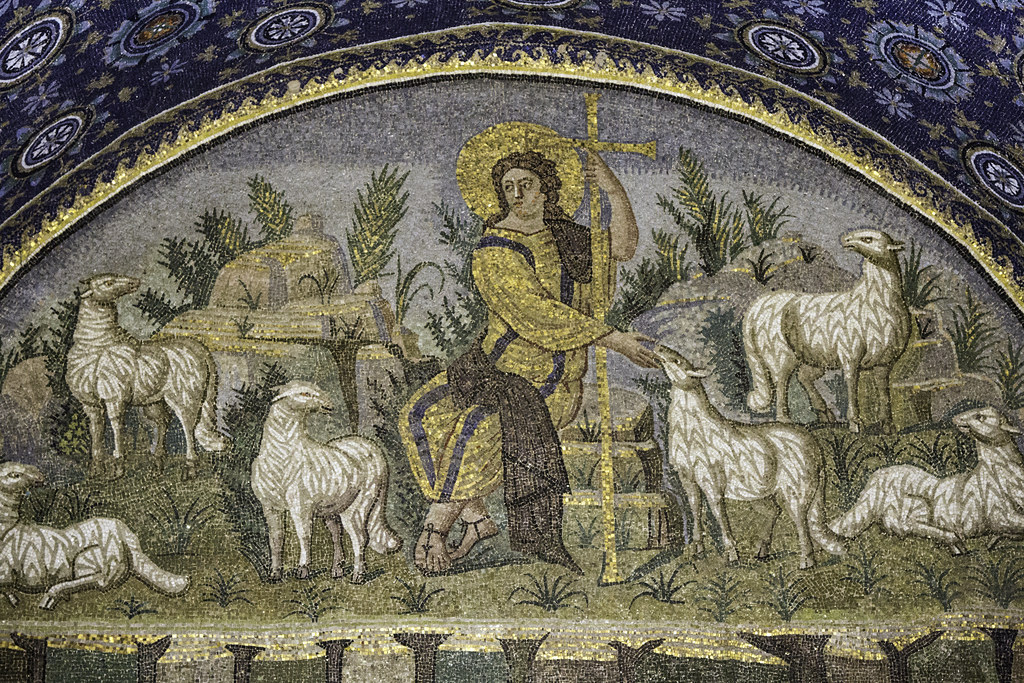
Jesus shifts metaphor from light to shepherd, though the underlying claim is the same. He contrasts Himself with thieves and robbers who come to steal, kill, and destroy — a pointed critique of religious leadership that exploits the flock rather than serving it (echoing Ezekiel 34). The true shepherd enters through the gate; the sheep know his voice; he calls his own sheep by name. The sheep follow because they know his voice — but they will not follow a stranger.
Jesus then names Himself both the gate and the good shepherd — two different but complementary images. As the gate, He is the only means of access: 'I am the door. If anyone enters by me, he will be saved and will go in and out and find pasture' (10:9). As the good shepherd, He is the one who lays down His life for the sheep — as opposed to the hired hand, who abandons the sheep when danger comes. The difference is ownership and love: this is His flock and He loves them.
'I am the good shepherd. I know my own and my own know me, just as the Father knows me and I know the Father; and I lay down my life for the sheep' (10:14–15). The intimacy of shepherd and sheep is modeled on the intimacy of Father and Son — the deepest relational knowledge in the universe. And He has other sheep 'not of this fold' — a reference to Gentile believers — who will also hear His voice, until there is one flock, one shepherd. He does not lose His sheep to death; He gives up His life deliberately, and He will take it up again. 'No one takes it from me, but I lay it down of my own accord.'
For Reflection
- Jesus describes His sheep as knowing His voice. How do you distinguish the voice of Jesus from other voices — including religious voices — in your life?
- The Good Shepherd knows His sheep by name. How does being personally known — not just generally loved — by God affect you?
- Jesus laid down His life voluntarily. What does willingness to sacrifice — rather than resignation to it — look like in the context of marriage and family?