Day 21: I Was Blind, Now I See (John 9:1–41)
“One thing I do know; that though I was blind, now I see.”
John 9:25 (NASB)
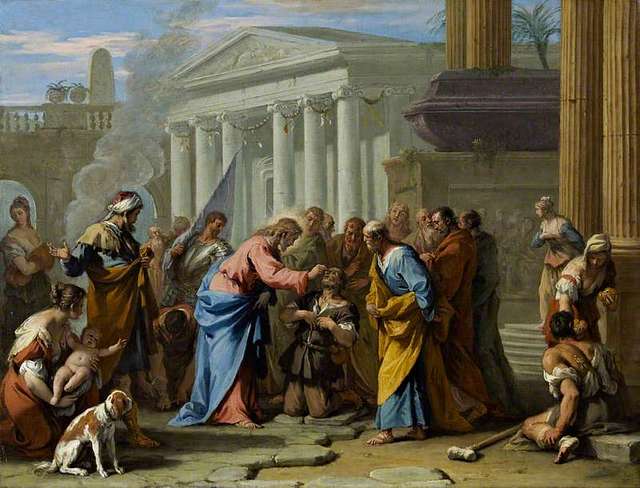
The greatest testimony to a lost world is also the most impossible to argue against. It is simply this: I was blind, and now I see. John places this miracle like a flashing beacon squarely in the middle of his narrative, and the Pharisees have no choice but to confront it.
The story begins with a question. Maladies were commonly understood as either the curse of sin on nature (born with it) or the consequence of a life lived in disobedience to God’s revealed word. Jesus gives a different answer: this man was born blind for a greater purpose — that the very glory of God might be displayed to those willing to see. Jesus sums it up Himself: the world is in darkness, and He is the light. The call is clear. You are able to see. But will you?
After the man is healed, he is brought before the Pharisees. They cannot believe the miracle, so they try to disprove it — perhaps he was never blind at all, and this is just a random healing. But no. Christ forces them to reckon with Him. This man was born blind. He did not lose his light; he was born in the dark.
Watch the pressure build around this simple man. Anyone who confesses the Christ will be put out of the synagogue. Even his parents are too afraid to stand with him. Yet his answer holds: “I was blind, and now I see.” The Pharisees demand a better explanation — it cannot be that simple. He answers, “I told you already and you did not listen,” and then, more pointedly, “You do not want to become His disciples too, do you?” The blind beggar has made his choice. He is a disciple. If you want to see, you must make it too.
The epilogue lays the truth bare. The man is cast out of the religious institution, but Jesus is not after religious platitudes. He finds him and asks simply, “Do you believe?” The man’s response: tell me who He is, and I will. The blind beggar believes. Will you?
For Reflection
- In a world that sees through hypocrisy more than ever, our lives had better match our words. How can you make sure others know that you truly “see”?
- God proclaimed through the prophets that He desires “loyalty rather than sacrifice” (Hosea 6:6). John 9 shows us two groups: “seeing” Pharisees who are spiritually blind, and a “blind” beggar who truly sees because he is in the light. How can we show others love and mercy rather than demanding sacrifice?
- At the end, the Pharisees are told, “If you were blind, you would have no sin” — but they claim to see. They know the truth, yet fail to love the way God loves. We can be the same. How can we seek today to love as God loves?